

In the constantly evolving realm of technology, the significance of applications and mobile devices has surged, serving as indispensable assets for the exchange of information and communication. Consequently, numerous enterprises seek to design applications akin to WhatsApp, capitalizing on its widespread acclaim. Nevertheless,
it’s imperative to recognize that the financial outlay for the development of a WhatsApp-like app in 2025 can fluctuate considerably due to an array of determinants. This article will delve into the diverse cost considerations linked to the creation of a comparable application and furnish an estimated cost bracket for this undertaking.
Steps on How to Create App Like Whatsapp
Developing an application similar to WhatsApp in the year 2025 presents both challenges and opportunities. It is a feasible endeavor, provided you possess fundamental knowledge of software development and are proficient in coding languages such as Java and Swift. Furthermore, it is essential to identify a reputable app development firm with the requisite expertise and resources to guarantee the triumph of your application. Here is a breakdown of the essential steps to initiate the development of an application akin to WhatsApp.
- Identify your target audience: The primary stage in the creation of an application similar to WhatsApp involves identifying the intended user base. This pivotal step aids in shaping the app’s functionalities, its overall design, and devising an effective marketing approach to connect with the desired demographic.
- Create a wireframe: A wireframe serves as a visual depiction illustrating the organization and aesthetics of an application. Its primary utility lies in assisting with the assessment of an application’s arrangement and user interaction pathways.
- Develop the app: Once the wireframe is established, the application can be constructed using programming languages such as Java and Swift. Furthermore, the incorporation of functionalities such as push notifications and in-app purchases may require the utilization of a Software Development Kit (SDK).
- Test and launch:After completing the development of your application, it becomes imperative to conduct comprehensive testing to ensure the optimal functionality of all its features. Once you have confirmed your satisfaction with the outcomes, you can proceed to release your application on digital marketplaces such as the App Store or Google Play Store.
- Promoting your app: Once your application is live, the next step involves promoting it effectively, ensuring its discoverability and utilization by the intended audience. Various promotional techniques can be employed, including search engine optimization (SEO), email marketing initiatives, social media advertisements, and more, in order to engage with your desired user base.
Creation of a Proper Business Model for WhatsApp-Like App
Creating a messaging application similar to WhatsApp while establishing a robust and sustainable business model requires a distinct combination of strategic planning, inventive thinking, and an unwavering dedication to delivering value to users.
The widespread success of WhatsApp has motivated numerous entrepreneurs and companies to explore opportunities in the messaging app sector. Here, we present a unique blueprint for the development of such an application, with a focus on ensuring long-term financial viability:
- Strategic market analysis and target audience focus: Embark on your journey by thoroughly exploring the landscape of messaging apps, gaining a deep understanding of user preferences, demographics, and behavioral patterns. Subsequently, pinpoint your specific niche within this market and uncover any unmet needs or challenges that your app can adeptly address.
- Prospective vision and competitive distinction: While WhatsApp serves as a benchmark, your app’s triumph hinges on its unique qualities. Reflect on what sets your app apart, whether it’s innovative features, robust security measures, or an unmatched user experience. Craft a clear value proposition that encapsulates the essence of your messaging application.
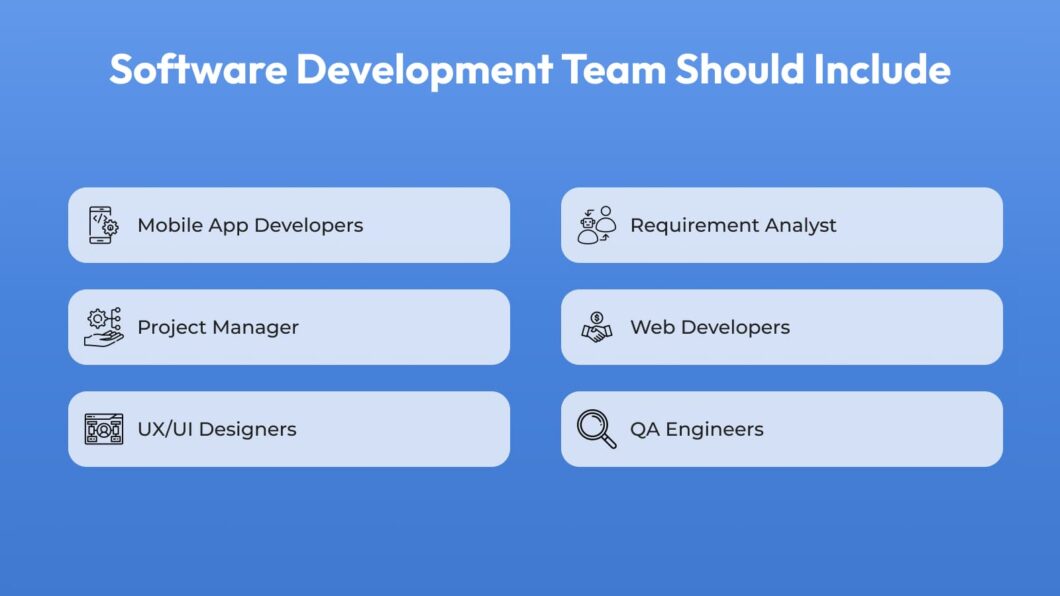
- Strategic technology stack and expert development: Choose an appropriate technology stack, taking into account factors like scalability, security, and user satisfaction. Assemble a dynamic development team consisting of experts in mobile app development, backend infrastructure, and state-of-the-art security protocols.
- User privacy and data security: In the realm of messaging applications, safeguarding user data is imperative. Implement end-to-end encryption to fortify user data privacy. Establish a robust framework of security protocols to thwart potential breaches.
- Enhanced features and seamless user experience: Cultivate an application replete with features, encompassing messaging, as well as get to know more about how to build a video chat app. Pay unwavering attention to crafting user-friendly interfaces, intuitive navigation, and seamless performance.
- Monetization strategy: Select an appropriate monetization model, be it a subscription-based model, in-app advertising, in-app purchases, or providing business accounts with enhanced paid functionality.
- User engagement and loyalty: Devise a strategic plan for user acquisition, a fusion of precise advertising, strategic partnerships, and enticing influencer collaborations. User retention depends on continual improvement – enhance your app, listen to user feedback, and create incentives to bolster user loyalty.
- Compliance with regulatory requirements: Navigate the complex landscape of data regulations, such as GDPR or CCPA, with confidence, ensuring that your app garners user trust and complies with the law. Stay vigilant and adaptable as regulations evolve.
- Ongoing maintenance and support: Prepare for the future by ensuring scalability to accommodate a growing user base. Dedicate your efforts to the vigilant maintenance of your app, regularly addressing issues, improving security, and introducing new features.
- User-centric adaptation: Stay attuned to user feedback, adapting your app in response to valuable insights. Evolve continuously, aligning your application with user preferences and the ever-changing trends.
Developing a messaging application that mirrors the appeal of WhatsApp presents a significant and challenging opportunity. However, by implementing a novel and unique business approach, maintaining a steadfast dedication to ensuring user contentment, and consistently striving to redefine the possibilities within the messaging sphere, you can create an application that not only enters the competitive arena but also stands out as a top performer among messaging apps.
Why Hire a Dedicated Team to Develop WhatsApp?
Today, the trend of engaging a specialized team for the creation of a WhatsApp-like application is gaining popularity and is proving to be a cost-efficient approach. Given the swift evolution of technology, many businesses are now more likely to outsource their mobile application development needs. The expenses associated with crafting a WhatsApp-like app in 2025 are contingent upon the project’s scale, complexity of desired features, and overall scope.
In the process of assembling the right team, it is paramount to choose a group with a proven proficiency in the development of applications resembling WhatsApp. Additionally, it’s crucial to inquire about their communication methods, pricing structures, and project completion timelines. Typically, the cost for securing a dedicated development team for a basic version of a WhatsApp-like app ranges from $30,000 to $50,000, while more advanced versions may escalate to $100,000 to $150,000.
By the way, at Cleveroad, we offer a dedicated team model that provides a flexible and highly efficient solution for developing an app like WhatsApp. This model works by assembling a custom team of experts who work exclusively on your project. This dedicated approach ensures deep knowledge of your app’s specific requirements and business goals, leading to better communication, faster decision-making, and a more streamlined development process.
Unlike a traditional fixed-price or time-and-materials model, a dedicated team becomes a seamless extension of your in-house staff, allowing for greater flexibility to adapt to new features or market shifts. For a WhatsApp-like app, this means the team can rapidly address real-time challenges, such as integrating a new encryption protocol or optimizing a live video chat service, without the delays of a typical outsourcing engagement. It ensures consistent quality and continuous improvement throughout the entire project lifecycle, from initial concept to post-launch maintenance.
Essential Architecture and Tech Stack
WhatsApp employs the Ejabberd XMPP application server, which is implemented using the Erlang programming language, to manage message traffic between its users. The WhatsApp backend is meticulously crafted for reliability and scalability within the Erlang environment, boasting a robust framework characterized by extensive redundancy and fault tolerance.
This framework enables the seamless facilitation of enhanced communication among a vast global user base, with the ability to maintain more than one million concurrent connections across web, Android, iOS, and other client platforms. Furthermore, WhatsApp employs cutting-edge technologies, such as distributed load balancing algorithms for equitable distribution of message traffic and services like Razor PHPStorage for the archival of chat history and emoji assets.
In addition to these technological components, WhatsApp harnesses widely recognized tools to enhance its operational infrastructure. The deployment of applications on their servers is supported by Google App Engine, while data persistence solutions rely on MongoDB. Security is paramount, with the implementation of Elliptic Curve Cryptography (ECDH) for encryption between devices. The integration of a two-letter country code feature, facilitated by the Redis key/value store, streamlines media sharing across geographic boundaries. Automation of service-related tasks is achieved through Hubot, while configuration management benefits from the utilization of Puppet and Chef.
Real-time streaming feeds are managed using Apache Kafka, and project management is facilitated through the adoption of Flowdock and JIRA. Automated build, testing, and deployment processes are orchestrated by Jenkins. Additionally, Google Cloud Platform serves as the backbone for the infrastructure services supporting WhatsApp’s operations.
MVP Features to Include
Developing an application similar to WhatsApp doesn’t necessarily demand exorbitant costs. In reality, crafting a Minimum Viable Product (MVP) for such an application in 2025 can be achieved with efficiency and cost-effectiveness by prioritizing the development of its core functionalities.
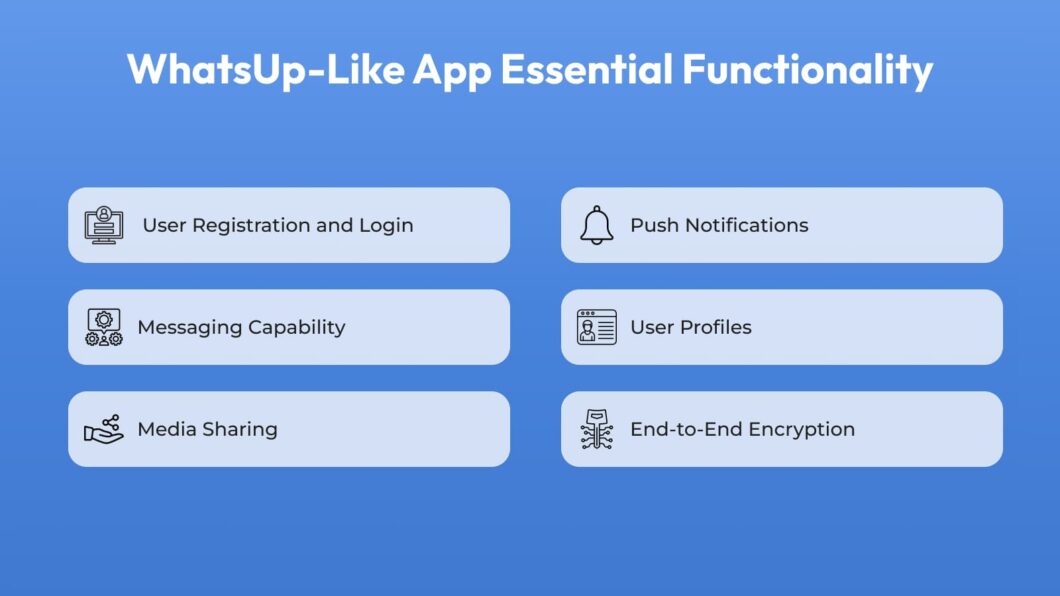
The pivotal strategy involves the identification of indispensable features for the MVP rendition of a WhatsApp-like app, followed by the implementation of the essential functions required to bring them to life. Some of these critical features that should be integrated into an MVP version of such an app encompass:
- User Registration and Login: Robust security measures must be established to facilitate seamless user registration and login processes.
- Messaging Capability: The application should empower users to send and receive messages, both individually and within group chats.
- Media Sharing: Users should have the ability to exchange photos, videos, and various other media files within their conversations.
- Push Notifications: The application should offer push notifications to keep users informed whenever they receive new messages.
- User Profiles: Personalization options should be available, allowing users to customize their individual profiles with profile pictures and status updates.
- End-to-End Encryption: To guarantee security, every message must be meticulously encrypted during transmission and while at rest.
How Does it Cost to Make an App Like Whatsapp?
Creating a messaging application similar to WhatsApp entails a budget that typically falls within the range of $35,000 to $250,000. The total cost depends on various factors, including the intricacy of the app’s design, the target platform, developer hourly rates, and geographical location. Additionally, it’s essential to allocate funds for incorporating advanced features, such as WhatsApp Web, Camera Filters, WhatsApp UPI payment integration, and end-to-end chat encryption, which have revolutionized the landscape of social media applications.
To gain a more precise understanding of the financial investment required for a project like this, you can explore online resources that offer formulas. These formulas allow you to input specific project requirements, including design complexity and desired features, to estimate the development budget for a messaging app akin to WhatsApp.
It is strongly advisable to conduct thorough research and due diligence before embarking on any mobile application development endeavor. This approach helps prevent the pitfalls of underestimating or overestimating costs and ensures that your project stays on track, avoiding financial strains and time inefficiencies.
To Sum Up
In conclusion, embarking on the development of an application similar to WhatsApp might appear daunting and unattainable. However, when executed correctly, it has the potential to yield substantial profits. It is imperative to dedicate considerable attention to comprehending the essential features and requirements of the application to ensure its prosperity in an already fiercely competitive market. Ultimately, meticulous research and strategic planning are pivotal components for the creation of a prosperous application akin to WhatsApp.
Initiate the process by conducting a comprehensive examination of what distinguishes your application from WhatsApp. Prior to delving into the realms of coding and design, it is crucial to enlist the services of proficient developers who possess a wealth of experience in developing applications that span various platforms. Collaborating with a team well-versed in both the technical intricacies and business-oriented systems can significantly enhance your prospects for a successful endeavor.
Author’s bio
Yuliya Melnik is a technical writer at Cleveroad, a website application development company in Ukraine. She is passionate about innovative technologies that make the world a better place and loves creating content that evokes vivid emotions.